The origins of the Ladybird company traces back to 1867 when a bookshop was opened by Henry Wills in Leicestershire. Within 10 years he progressed to printing and publishing guidebooks and direction books. In 1904 Wills was joined by William Hepworth and the company was traded as Wills and Hepworth.
By the August of 1914 Wills and Hepworth published their first children's books under the Ladybird print. The logo started out with open wings but then changed to a closed winged ladybird which has gone through many stages of redesigning, the latest was launched in 2006.
In 1964 Ladybird's 'Key Words Reading Scheme' was launched and was used by Primary Schools in Britain which helped children to read. This was a series of 36 small hardback books which were illustrated mostly by Harry Wingfield and Martin Aitchison.
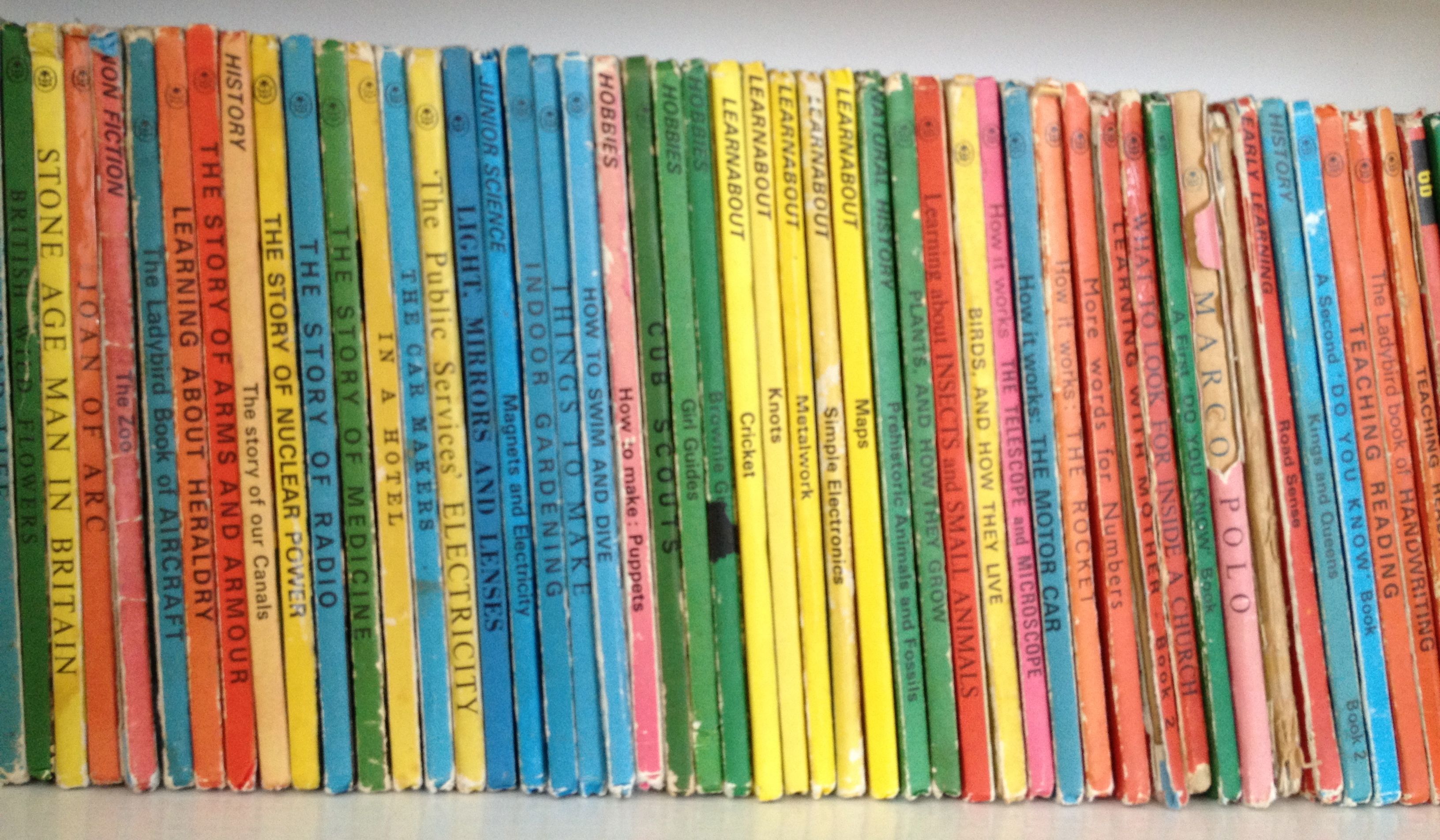
In the 1960's Ladybird produced a series of non-fiction books which were used by adults as well as children.
In 1972 Ladybird Books became part of the Pearson Group and then in 1998 Ladybird was merged into Penguin Books.
The classic pocket sized Ladybird books measured 4.5" x 7" (11.5cm x 18cm) and had a standard 56 page format, this was for printing purposes as a complete book of 56 pages could be printed on one large sheet of paper to then be folded and cut to create the book with no waste paper. This kept prices low which was at 12.5p (two shillings and sixpence) for almost 30 years. Although in 1980 Ladybird started printing in other formats.
Adults who grew up with Ladybird books series' still collect them now and it can be a very inexpensive hobby as it is quite easy to get hold of second hand Ladybird books.
http://www.ladybird.co.uk/
http://www.ladybird.co.uk/


No comments:
Post a Comment