Thursday, 13 March 2014

Visual Culture- 1950's and 1960's

1950's and 1960's

Pop Art

Pop art is an art movement which developed in the 1950's and progressed for decades after and is still a popular art movement today. The traditional pop art style consists of the use of very bright colours and bold black outlines, relating to that of a comic book style. It was usually used as part of advertising in the 50's. The two most well known and popular pop artists are Roy Lichtenstein and Andy Warhol. When pop art is mentioned these are the two artists you immediately think of because of their iconic art works such as Andy Warhol's Campbells Soup tin and Marilyn Monroe and Roy Lichtenstein's Crying Girl. The pop art movement has been a huge influence on visual arts and still is to this day.


ROY LICHTENSTEIN
https://d1ycxz9plii3tb.cloudfront.net/additional_images/511e6acf44b275e62b000144/large.jpg


ANDY WARHOL
http://mhsartgallerymac.wikispaces.com/file/view/war1.jpg/289479749/war1.jpg
ANDY WARHOL
http://upload.wikimedia.org/wikipedia/en/9/95/Warhol-Campbell_Soup-1-screenprint-1968.jpg

http://books.google.co.uk/books?id=KRtCl1nFSV8C&printsec=frontcover&dq=what+is+pop+art&hl=en&sa=X&ei=aN4hU7nPDKOV7QaG8oCgBA&ved=0CDYQ6wEwAQ#v=onepage&q=what%20is%20pop%20art&f=false

Visual Culture- The 1970s to the Digital Revolution

The 1970s to the Digital Revolution

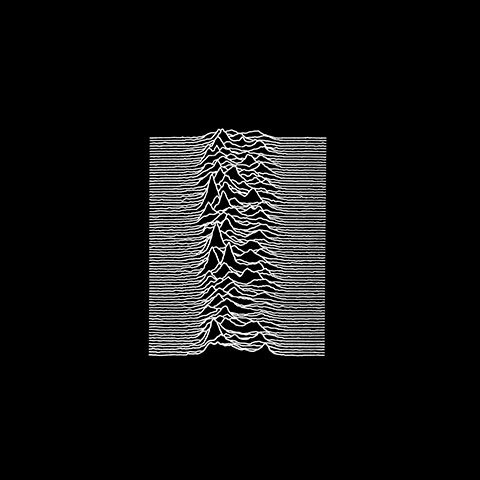
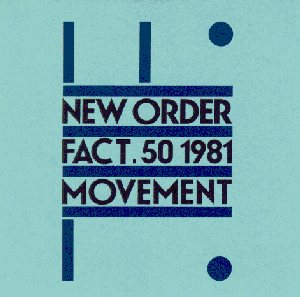
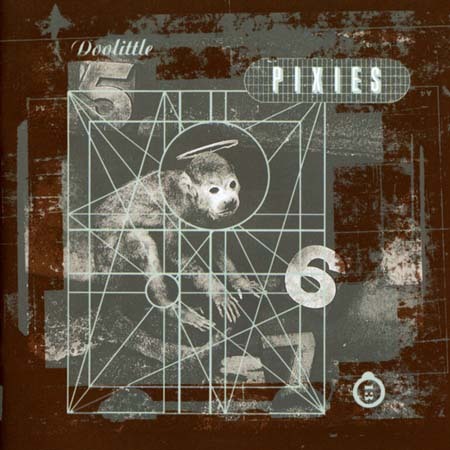
The 1970's onward was a time when graphics was at it's peak with the release of new music artists and bands. There were many artists of the time creating album covers for the likes of Joy Division (which is probably one of his most famous piece of art work), New Order, Wham!, Suede, Pulp and many more. Well known artists of the time Peter Saville was one of the most popular graphic designers and he created a lot of art work for most of the above bands. Another one of these artists included Vaughan Oliver who created album art for the likes of The Pixies and The Mortal Coil. He worked a lot with typography as you can tell in most of his work whilst Peter Saville was more about colour, shape and composition. Both, however, were really inspirational artists of the time. 

VAUGHAN OLIVER
http://media.tumblr.com/tumblr_lgqdoiM7Sf1qewqea.jpg
PETER SAVILLE
http://static.guim.co.uk/sys-images/Guardian/Pix/pictures
/2011/5/26/1306431339727/Unknown-Pleasures-006.jpg
VAUGHAN OLIVER
http://rymimg.com/lk/f/s/315a94bbbc44d429d9d1b1fe140a646d/107350.jpg

PETER SAVILLE
http://www.oliver-wood.co.uk/images/fac050.gif


http://books.google.co.uk/books?id=9cQxAQAAIAAJ&q=Peter+Saville&dq=Peter+Saville&hl=en&sa=X&ei=V9chU-S1PMG2hQe57ICgDA&ved=0CDEQ6wEwAA

Visual Culture- 1900's - 1920's

1900's - 1920's


Art photography is the process of taking photographs for aesthetic and personal reasons rather than for documentation. 
Artists who were fine art photographers in the 20th century included Edward Steichen and Alfred Stieglitz. 

Alfred Stieglitz was an american photographer who spent his career transforming photography into an art form and not a form of documentation. [1]
He is mostly known for his photographs of clouds, hands and landscapes. An example of these can be seen below.


http://karlcrofskey.files.wordpress.com/2013/05/clouds-26.jpg


http://cs10595.vkontakte.ru/u8350262/123363304/z_fe7833ed.jpg


http://mikophoto.net/wordpress/wp-content/uploads
/2010/11/Georgia-OKeeffe-Hands-Alfred-Stieglitz.jpg


Edward Steichen focused mostly on self portraits, landscapes and flowers, which can be seen below. 


http://silentstoryteller.typepad.com/.a
/6a0120a5343d23970b0120a67906d4970c-800wi
http://www.nps.gov/history/museum/exhibits/carl/story/
steichens/CARL221_edSteichenSelfPortrait.jpg


https://lh5.googleusercontent.com/-qZ4oE3jEL
7U/TWr4owB7xaI/AAAAAAAAAD
0/rZ3Pn0haDlk/s1600/edward+steichen_flatiron.jpg


[1]http://www.metmuseum.org/toah/hd/stgp/hd_stgp.htm


Monday, 3 March 2014

Visual Culture- 1930

1930


Art Deco

Art Deco was an art style which was popular in the 1920's and 1930's, originating in France at the end of the First World War. 
          'The style, which was introduced in 1925 at the Paris Exposition des Arts Decoratifs &
           Industriels Moderned, was referred to as ''art moderne''(only decades later it was
           called Art Deco)'[1]

The style of Art Deco mostly consisted of geometric patterns and shapes which were rendered with bright colours and a range of texture and usual appeared on household objects. Art Deco was an influence many areas of the art industry, including fashion, graphic design and film.           
           'For the most part, the style relied on patterns made up of reductive ornamentation.
           The airbrush was the defining tool - although other drawing and painting media were
           commonly used - because it enables artists to create textures made from line, mass,
           and shadow.' [2]


[3]

[4]


[5]

[6]


[1] Steven Heller. Illustration: A Visual History. p.53
[2] Steven Heller. Illustration: A Visual History. p.53-55
[3] Fortunato Depero. Cover Illustration. Vanity Fair, July 1930
[4] Jean Carlu. Cover Illustration. Vanity Fair, July 1931
[5] L.A. Mauzen. Advertisement for Sensacional Liquidacion, c.1930
[6] Marcelo Dudovich. Detail from an advertisement for Borsalino, c, 1930

Visual Culture- 1940's and 1950's

1940's and 1950's

Around the time of the second world war graphic design was at it's peak due to posters and banners used for political reasons such as elections.
                 'By the time war was declared in 1939, graphic design had come to play and
                 essential  part in political life, particularly at election times. Walls were papered with
                 posters, leaflets strewn in the streets and banners and placards flourished at
                 meetings and demonstrations.' [1]
Throughout this time period political figures such as Hitler, Mussolini and Stalin became recognised by their own unique symbols. These also appeared of newspapers, in magazines and on posters and stamps. They soon became icons of the 20th century.
                   'In Europe, opponents were vilified in venomous illustrations; heroic images of party
                    members, identified by their symbols, banners and uniforms and recognized by
                    their salutes.' 


[3]
[4]


[5]

[6]
[7]


[8]

[9]
[10]


[11]


[1] Richard Hollis.Graphic Design: A Concise History. p.104
[2] Richard Hollis.Graphic Design: A Concise History. p.104
[3]-[11] Dover. Posters of World Wars I and II. 

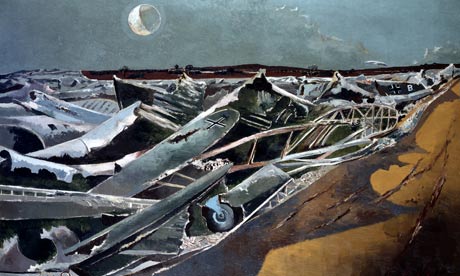
Paul Nash was an artist who was employed as a war artist during World War II. As well as a war artist Paul Nash was a painter, writer and a book illustrator. His medium captured the essence of war very well.

www.sarahfrisk.net

www.hagaborg.blogspot.com


www.iwm.org.uk


www.theguardian.com
www.bbc.co.uk