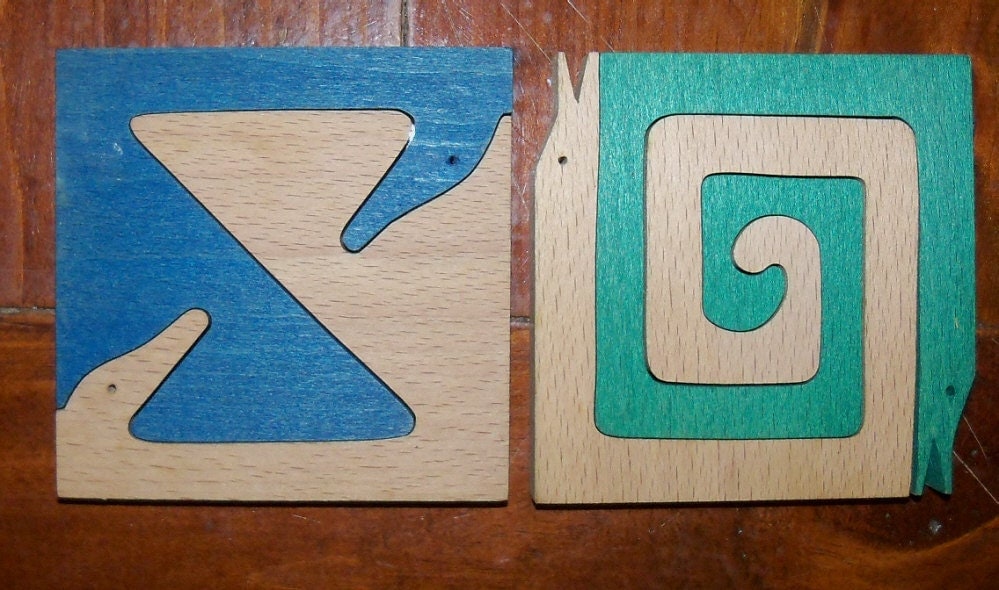
Fredun Shapur is a graphic designer who mainly created his work as a contribution to children. From the 1960's through to the 1980's he had designed toys for Neaf, Galt, and Creative Playthings where he created an iconic logo. He exhibits his work through book illustrations, record covers, packaging and toys. “Shapur produced toys that highlighted and challenged the child’s agency while appealing to the parents’ tastes.” [1] In 1959 Shapur worked on logo, packaging and posters in his own office and was inspired by his children to create toys. Animal Puzzle was designed in 1963 where children could make their own creatures from a block of interlocking squares, the images where silkscreened onto the blocks. His toys were firstly handmade by himself and his wife but then he hired artisans to increase the production of hi products.
Chelsea Coils - Visual Culture
Tuesday, 9 December 2014
Monday, 8 December 2014
Visual Culture Level 5 - Identity and Creative Voice
My task this week is to identify myself. I took a look at my own work from the course of my year and half of studying illustration and thought about what kind of illustrator I want to be. I have previously researched different kinds of illustrators such as Children's Book, Advertising, Editorial, Graphical, Product, Fashion, Gallery and Prints etc. I don't seem to fit into just one of the above categories. I think I could work well in more than one area of illustration which is why I don't really have a label for myself. I believe that I would be classed as a freelance illustrator. Before I attended CCAD I attended a college in which I never knew I wanted to be an illustrator and because of this I don't really have any personal work in which I could use as an identity in my industry (I will be working on some when I have less things to focus on for my course) therefore I feel I only have a few images which I would be happy with having as my identity. They are from my previous project where I drew illustrations for a narrative, in this case it was Hansel and Gretel. I really like the 2 images below and I even use the mouse now as kind of a social network image. I have it at the top of my blog and the top of my Facebook page.

I think these images say a lot about the way I work as I tend to work this way quite a bit. I I have hardly used any colour unless absolutely necessary in my previous projects, I really enjoy drawing in black and white as I think the contrast makes it easier to read the image. I also like experimenting with different techniques and I have begun to know what technique would be best for each piece of work I go to create.

I think these images say a lot about the way I work as I tend to work this way quite a bit. I I have hardly used any colour unless absolutely necessary in my previous projects, I really enjoy drawing in black and white as I think the contrast makes it easier to read the image. I also like experimenting with different techniques and I have begun to know what technique would be best for each piece of work I go to create.
Visual Culture Level 5 - Gendering The Image
In this session we carried out a task where we were given some sets of 2 images, one image was created by a woman and the other image by a man. Our challenge was to figure out which was by the woman and which was by the man and have reasons for our choices. This task made me realise that it is possible to tell what gender has created the piece by having simple art history knowledge. I found this as one set of the images were 2 embroidered clothing items from Japanese culture, one of which was very intricate and detailed while one was a rather simple design and in a group we came to the conclusion that the detailed one was by the male because for that type of detail you need to be taught in schools and in those times of early Japan women weren't given the privilege of going to school to learn, this theory proved to be correct.
I have taken this opportunity to look at 2 illustrators, one female and one male and I am going to explain why I think one portrays male and the other portrays female. I have chosen 2 illustrators which create similar images because I think that will create a good comparison. I have chosen Sunga Park as the male and Jennifer Maravillas as the female. They have both created images which show buildings and architecture and below I will explain why i think the images portray their gender.
Jennifer Maravillas:
In the same session as above I remember one of my fellow class mates say that women perceive colours differently to men therefore that's why I believe this image portrays the female gender.
Also the lines and shapes of the buildings are very careless. There is a general shape to the images but it is very simplified and I think this is because men are more likely to see things in more of an industrial sense therefore a female is more likely to use shapes and bold lines rather than perfect architectural like lines.
I also think the fact that the image is majorly clustered with images and I think this is more of a female doing as they tend to create things as more of a design than a single image.
Sunga Park:
The first thing that jumps out at me about this one is the colour Sunga has used. It is has been test proven that males are more likely to be more attracted to using the colour blue than women.
The lines of the building are very perfectly drawn, like that of architectural sketches / drawings whilst in the female image the lines are rather bold and not so delicate.
The drawing is also very industrial which is more of a male trait. Men seem to look at things in a more industrial way therefore he was able to create this image with very small detail and intricacy.
Wednesday, 3 December 2014
Visual Culture Level 5 - Symbolism in Illustration
In the late nineteenth century symbolism became an art movement of French, Russian and Belgian origin in the arts. The literary works of the likes of Edgar Allan Poe was as influence to symbolism. Symbolism in the aesthetic side of the arts was developed by Stephanie Mallarme and Paul Verlaine in the 1860's and 70's. Symbolism of art is also related to the gothic component of Romanticism.
Symbolist artists used mostly mythological and dream like imagery in their works and are used to portray personal, private, obscure and ambiguous references. Symbolism in art influenced Art Nouveau style and Les Nabis.
In the world of illustration Symbolism is portrayed amazingly in The Purple Book: Sensuality and Symbolism in Contemporary Art and Illustration. This book is filled with illustrations and creations which explore the idea of fantasy, sensuality and the erotic imagination. It represents the human desire's relationship with dream states, fiction and symbolism. The majority of the work in this book is unpublished, personal work and the entry in the book is usually the first print of the work. This book is inspired by The Yellow Book which was published in the 1890's, the colour yellow in this time was seen as sexualised and the colour purple today is seen sensually.
Visual Culture Level 5 - Lady Bird Books
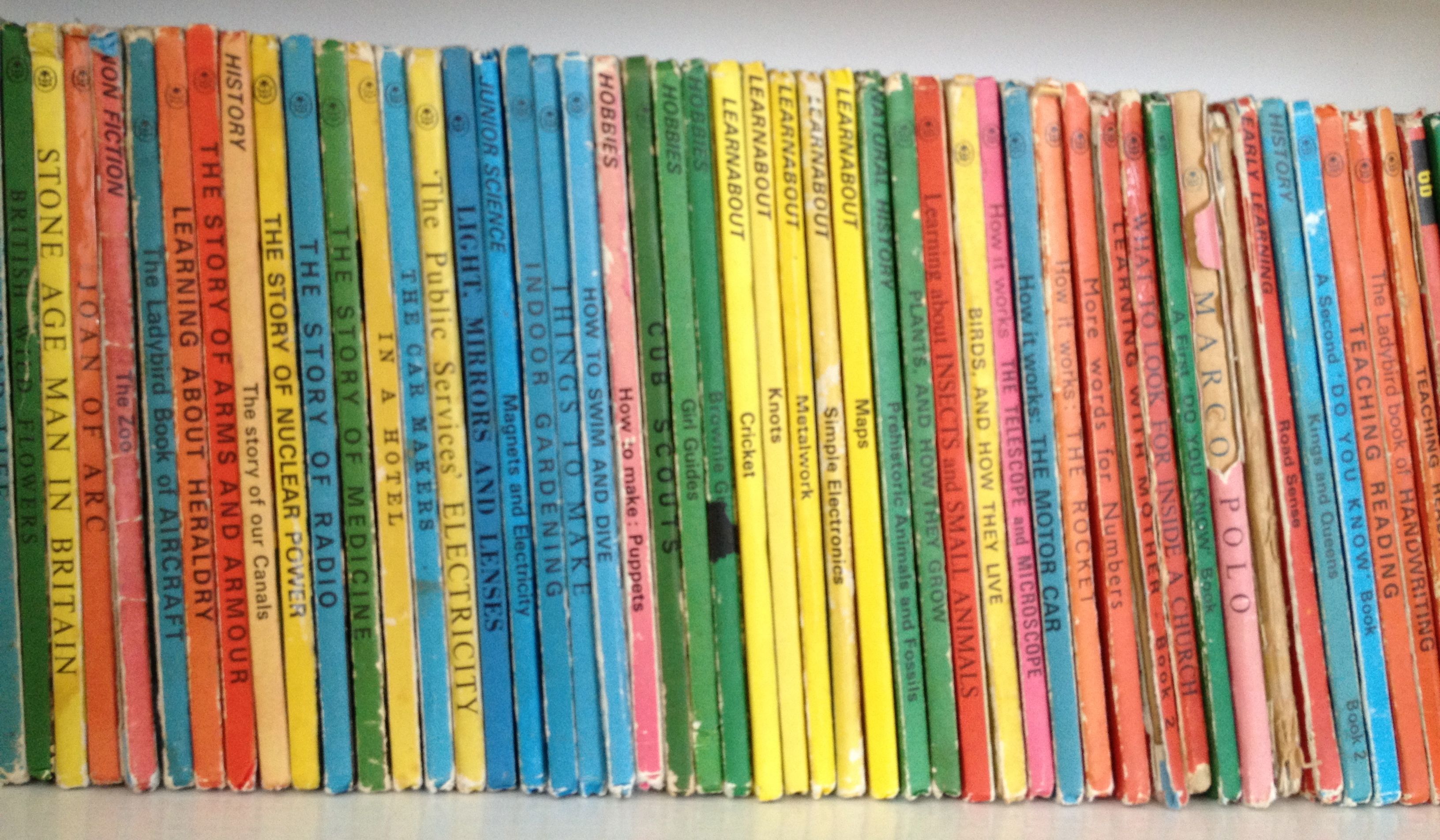
The origins of the Ladybird company traces back to 1867 when a bookshop was opened by Henry Wills in Leicestershire. Within 10 years he progressed to printing and publishing guidebooks and direction books. In 1904 Wills was joined by William Hepworth and the company was traded as Wills and Hepworth.
By the August of 1914 Wills and Hepworth published their first children's books under the Ladybird print. The logo started out with open wings but then changed to a closed winged ladybird which has gone through many stages of redesigning, the latest was launched in 2006.
In 1964 Ladybird's 'Key Words Reading Scheme' was launched and was used by Primary Schools in Britain which helped children to read. This was a series of 36 small hardback books which were illustrated mostly by Harry Wingfield and Martin Aitchison.
In the 1960's Ladybird produced a series of non-fiction books which were used by adults as well as children.
In 1972 Ladybird Books became part of the Pearson Group and then in 1998 Ladybird was merged into Penguin Books.
The classic pocket sized Ladybird books measured 4.5" x 7" (11.5cm x 18cm) and had a standard 56 page format, this was for printing purposes as a complete book of 56 pages could be printed on one large sheet of paper to then be folded and cut to create the book with no waste paper. This kept prices low which was at 12.5p (two shillings and sixpence) for almost 30 years. Although in 1980 Ladybird started printing in other formats.
Adults who grew up with Ladybird books series' still collect them now and it can be a very inexpensive hobby as it is quite easy to get hold of second hand Ladybird books.
http://www.ladybird.co.uk/
Tuesday, 7 October 2014
Visual Culture Level 5 - Targeting the Youth Market / Sgt. Pepper's Lonely Hearts Club Band
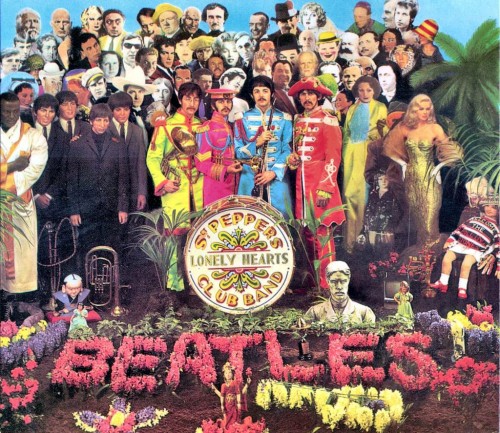
Sgt. Pepper’s Lonely Hearts Club Band is an album by The Beatles and the cover art was designed by Peter Blake and Jann Haworth from a drawing by Paul McCartney. It was photographed by Michael Cooper and it included a collage of The Beatles in costumes as the Sgt. Pepper's Lonely Hearts Club Band and they were stood with cardboard cut outs of various famous people. There are also 4 wax modles of the "old" beatles stood next to them, to create a contrast of the old style and their new style. Their mustaches represent the influence of the hippie trend and they are stood behind a drum skin bearing the name of the album created by Joe Ephgrave. The concept for the album cover was "people we like" and that explains the mass of famous people in the background. There was a big question about why Elvis didn't appear on the cover and when Paul McCartney was asked this he replied "Elvis was too important and too far above the rest even to mention ... so we didn't put him on the list because he was more than merely a ... pop singer, he was Elvis the King".
http://www.neatorama.com/2012/04/05/the-cover-art-of-sgt-peppers-llonely-hearts-club-band/
Monday, 6 October 2014
Visual Culture Level 5 - Golden Age of Illustration / Chris Riddell
Chris Riddell was born in Cape Town, South Africa in 1962 and then moved to England in 1963. From 1981 to 1984 he studied illustration at Brighton Polytechnic, where he was taught by the illustrator of ''When the Wind Blows'', Raymond Briggs. Chris Riddell labels Raymond as a huge influence on his work and Briggs introduced him to a publisher and Chris was then commissioned to illustrate ''The Book of Giants for Sainsbury's''.
''From 1981 to 1984 he studied illustration at Brighton Polytechnic, where he was taught by Raymond Briggs, the children's illustrator whose first political book, When the Wind Blows, appeared in 1982. Riddell acknowledges him as a "huge influence" on his work. Briggs introduced him to his own publisher, and, while still a student, Riddell was commissioned to illustrate The Book of Giants for Sainsbury’s. It appeared in 1985.'' [1]
In 1988 Riddell was hired by the editor of the Economist to illustrate the articles of the magazine. He got a job as a political cartoonist for the Sunday Correspondent and he was also a business cartoonist for the Observer.
'' In 1989 Riddell got his first job as political cartoonist, for the short-lived Sunday Correspondent, and from 1990 to 1991 he was also business cartoonist on the Observer, producing illustrations for the personal finance pages.'' [2]
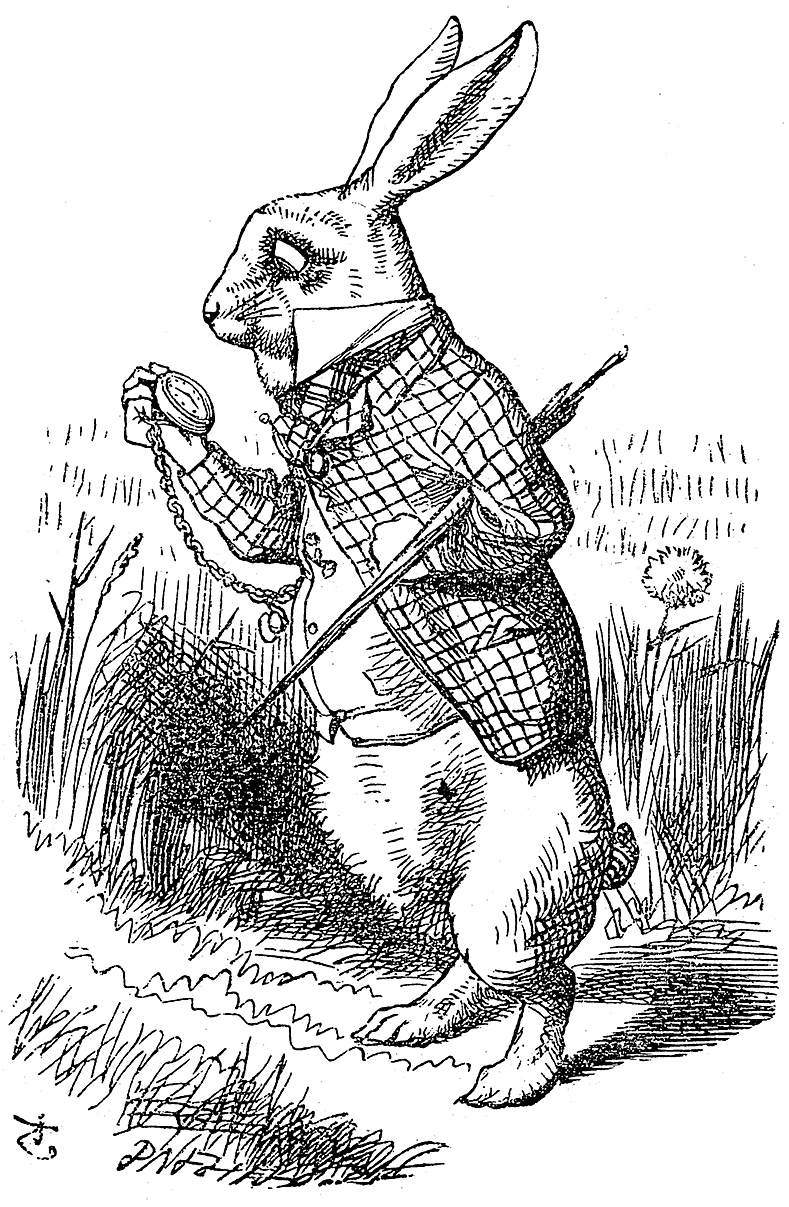
Riddell has a few influences such as Ernest Shepard [3], John Tenniel [4], and William Heath Robinson. Riddell really loves Heath Robinsons illustrations for Professor Branestawm. [5] He also likes black and white book illustrations and I think this influence can be seen throughout his work and then he started to experiment with colour when he was working for the Observer.
''"I particularly loved his illustrations for Professor Branestawm" - as well as the black and white book illustrators of the nineteenth and early twentieth centuries. Although a lover of black and white, Riddell successfully managed the transition to colour at the Observer, despite poor colour registration in the early days.'' [6]
Riddell has also illustrated covers for Punch, Economist, New Statesman and Literary review along side a massive selection of childrens books such as The Wish Factory, Goth Girl and the Ottoline Cat series.
''Riddell has drawn covers for Punch, Economist, New Statesman and Literary Review. He has also written and illustrated a large number of very successful children's books.'' [7]
[1] UNKNOWN. Biography: Chris Riddell http://www.cartoons.ac.uk/artists/chrisriddell/biography (07.10.2014)
[2] UNKNOWN. Biography: Chris Riddell http://www.cartoons.ac.uk/artists/chrisriddell/biography (07.10.2014)
[3]
[4]

[5]
[6] UNKNOWN. Biography: Chris Riddell http://www.cartoons.ac.uk/artists/chrisriddell/biography (07.10.2014)
[7] UNKNOWN. Biography: Chris Riddell http://www.cartoons.ac.uk/artists/chrisriddell/biography (07.10.2014)
I notice that all of the information in the post is from the same website but the information on the website was from a selection of sources. The site had a bibliography at the bottom and I will insert the references below. I am not sure which quote matches to which reference as the website does not state this.
''From 1981 to 1984 he studied illustration at Brighton Polytechnic, where he was taught by Raymond Briggs, the children's illustrator whose first political book, When the Wind Blows, appeared in 1982. Riddell acknowledges him as a "huge influence" on his work. Briggs introduced him to his own publisher, and, while still a student, Riddell was commissioned to illustrate The Book of Giants for Sainsbury’s. It appeared in 1985.'' [1]
In 1988 Riddell was hired by the editor of the Economist to illustrate the articles of the magazine. He got a job as a political cartoonist for the Sunday Correspondent and he was also a business cartoonist for the Observer.
'' In 1989 Riddell got his first job as political cartoonist, for the short-lived Sunday Correspondent, and from 1990 to 1991 he was also business cartoonist on the Observer, producing illustrations for the personal finance pages.'' [2]
Riddell has a few influences such as Ernest Shepard [3], John Tenniel [4], and William Heath Robinson. Riddell really loves Heath Robinsons illustrations for Professor Branestawm. [5] He also likes black and white book illustrations and I think this influence can be seen throughout his work and then he started to experiment with colour when he was working for the Observer.
''"I particularly loved his illustrations for Professor Branestawm" - as well as the black and white book illustrators of the nineteenth and early twentieth centuries. Although a lover of black and white, Riddell successfully managed the transition to colour at the Observer, despite poor colour registration in the early days.'' [6]
Riddell has also illustrated covers for Punch, Economist, New Statesman and Literary review along side a massive selection of childrens books such as The Wish Factory, Goth Girl and the Ottoline Cat series.
''Riddell has drawn covers for Punch, Economist, New Statesman and Literary Review. He has also written and illustrated a large number of very successful children's books.'' [7]
[1] UNKNOWN. Biography: Chris Riddell http://www.cartoons.ac.uk/artists/chrisriddell/biography (07.10.2014)
[2] UNKNOWN. Biography: Chris Riddell http://www.cartoons.ac.uk/artists/chrisriddell/biography (07.10.2014)
[3]
[4]
[5]
[6] UNKNOWN. Biography: Chris Riddell http://www.cartoons.ac.uk/artists/chrisriddell/biography (07.10.2014)
I notice that all of the information in the post is from the same website but the information on the website was from a selection of sources. The site had a bibliography at the bottom and I will insert the references below. I am not sure which quote matches to which reference as the website does not state this.
- John Sweeney "Rats, Pigs and other Political Animals", Observer, 2 July 1995, p.4.
- Jack O'Sullivan "Can you recognise this man?", Independent, 12 May 1997, p.6.
- Chris Riddell "Blair's first birthday: 5: Drawing Tony Blair", Observer, 26 April 1998, p.27.
- "Chris Riddell honours the life and work of Chic Jacob", Observer, 17 September 2000, p.30.
- Mark Bryant Dictionary of Twentieth-Century British Cartoonists and Caricaturists (Ashgate, Aldershot, 2000), pp.184-6.
- "Background on Chris Riddell" 8 July 2005 -www.carnegiegreenaway.org.uk/pressdesk/press.php?release=pres_green_bg_0405.html
- Phil Hogan “CARTOONS: Drawn, quartered... and now hung”, The Observer, 27 January 2008, Review p.6.
- Vanessa Thorpe “Television satirists struggle to iden-tify targets in the kingdom of the bland”, The Observer, 18 April 2010, p.24.
- "Chris Riddell creates Little Clegg Riding Hood" [video in which Chris Riddell explains - and is shown drawing - his cartoon for 4 July 2010 (BCA catalogue 81401)] www.guardian.co.uk/global/video/2010/jul/18/nickclegg
Subscribe to:
Comments (Atom)