Cinema started out as a range of development processes where new devices would be invented and created to improve the visual elements of film.
'It was an evolutionary process in which each new device or discovery inspired a fresh
wave of emulation and experimentation, sometimes for the purpose of entertainment,
but often in the cause of science alone.'1
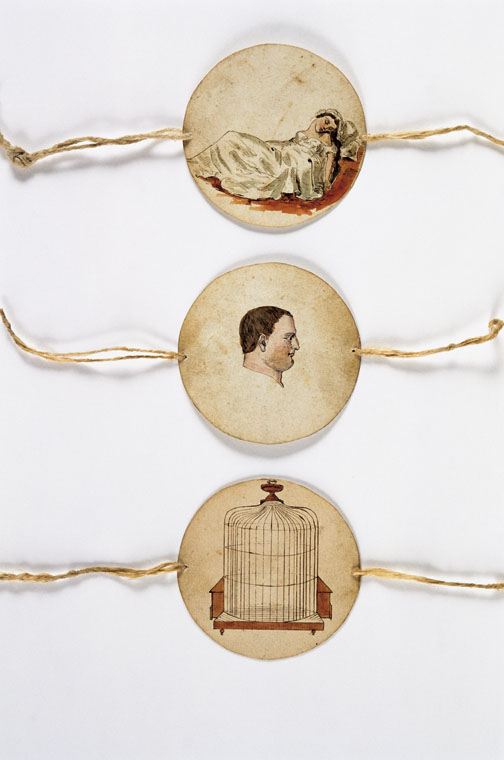
One of the first forms of moving picture was the Thaumatrope which was influenced by Sir John Herschel's 'spinning coin principle'. This was were a disc of cardboard was spun on a piece of thread enabling the images on the cardboard to be merged together to create a moving picture.
'Based on Sir John Herschel's spinning-coin-principle, it was a cardboard disc which
merged the pictures on each face into a single image when spun on a piece of thread.'2
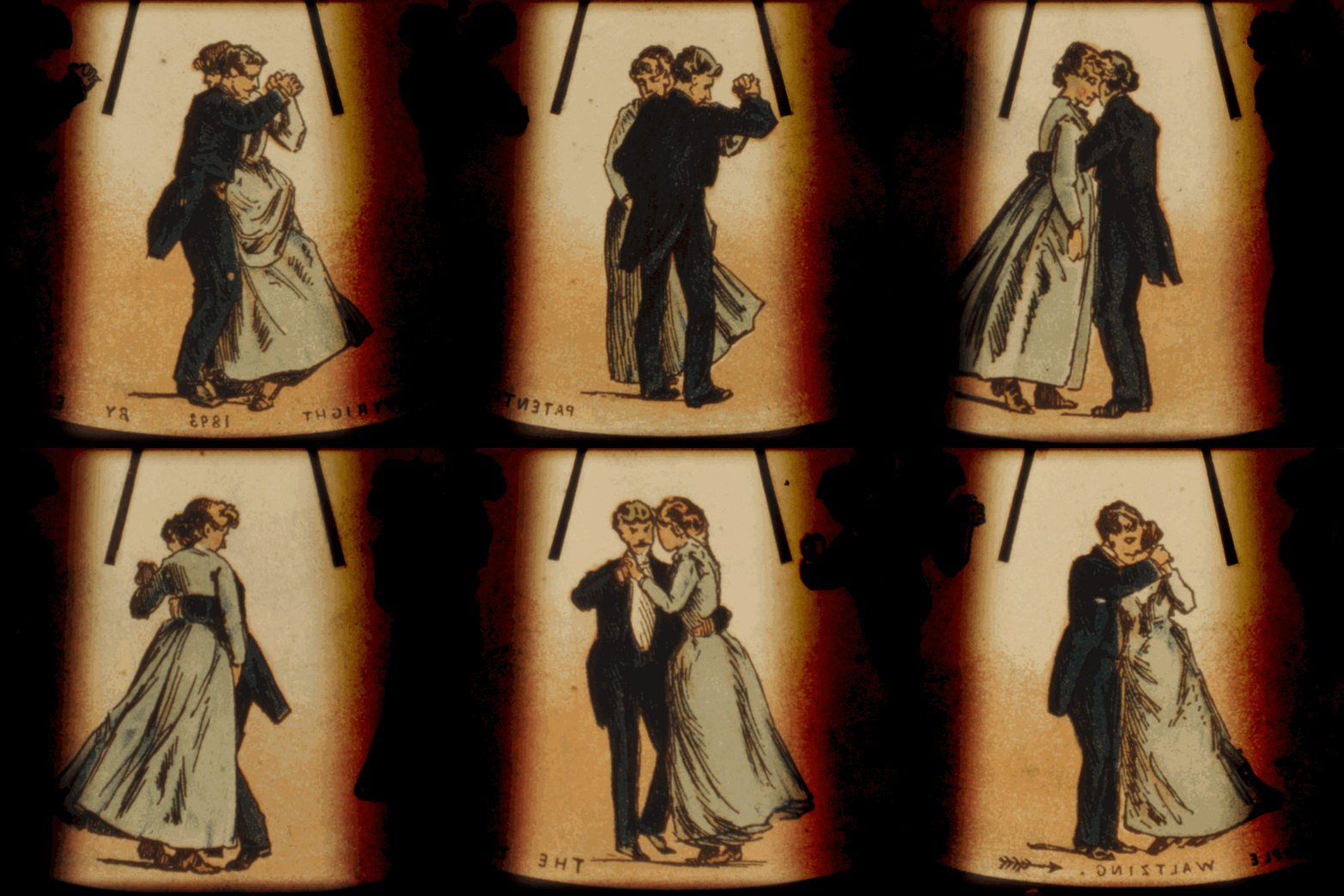
Another form of moving picture was then invented called The Phenakistoscope. This was a ridged disc with images around the edge facing out and when it was rotated it appeared to move when viewed.
'The Phenakistoscope was a serrated disk with a series of drawings about its outer edge
which gave the impression of movement when rotated and viewed through it's teeth in a
mirror.'3
Over time moving picture was developed and Von Stampfer and George Horner invented similar devices as had already been invented.
'Von Stampfer's device comprised two discs, one slotted and the other bearing the
drawings. When viewed through the slots the rotating drawings appeared to portray a
continuous action.'4
'George Horner's Daedalum, invented in 1834, replaced the discs with a strip which gave
an identical impression when placed around the wall of a spinning slotted drum.'5
In 1876 Emile Reynaud invented the Praxinoscope which he had developed to create bright moving images by adding mirrors to the middle of the rotating drum.
'His Praxinoscope (1876) replaced the slots of the Zoetrope with a polygonal drum of mirrors placed at its centre, which reflected the rotating drawings to give bright, sharp moving images.'6
As photography moved forward, series photography was developed by Eadweard Muybridge and Etienne-Jules Marey. In 1878, when fast exposure was possible, Muybridge proved that when a horse gallops, at one point all of it's hooves come off the ground.
'Muybridge was hired in 1872by Governor Leland Stanford of California to determine whether at some stage a galloping horse had all four hooves off the ground at once...Muybridge was successful in proving the point in 1878 when faster exposure times enabled him to perfect his apparatus.'7
In 1882 Marey modified the photographic revolver and then turned to roll film by the Eastman Kodak company and this is still a component in modern film making equipment.
'In 1882, he adapted the photographic revolver...After experimenting with multiple superimpositions on a single plate, Marey turned first to the paper and then the celluloid roll film marketed by the Eastman Kodak company to produce continuous strips of images called chronophotographes. The film's regular, intermittent passage was made possible by the Maltese cross mechanism devised by the German Oskar Messter, which is still a key component of much modern movie equipment.'8
William Kennedy Laurie Dickson used his knowledge and took elements from all stages of moving picture development and created a camera called the Kinetograph in 1890.
'Dickson, whose genius is too often overlooked, adapted elements from every stage of the evolution of the moving image to produce in 1890 a camera called the Kinetograph and, the following year, a viewer named the Kinetoscope.'9
[1] David Parkinson. History of Film. p.7
[2] David Parkinson. History of Film. p.8
 |
| http://wernernekes.de/00_cms/cms/ front_content.php?idart=522 |
[3] David Parkinson. History of Film. p.8
 |
| http://en.wikipedia.org/wiki/Phenakistoscope |
[4] David Parkinson. History of Film. p.8
[5] David Parkinson. History of Film. p.8
[6] David Parkinson. History of Film. p.12
 |
| http://www.magiadellaluce.com/ Pre-cinema%20animations.html |
[7] David Parkinson. History of Film. p.13-14
 |
| http://en.wikipedia.org/wiki/Eadweard_Muybridge |
[8] David Parkinson. History of Film. p.14-15
[9] David Parkinson. History of Film. p.15
 |
| David Parkinson. History of Film. p.14 |

No comments:
Post a Comment